Tehran, Tashkent discuss ways to expand tourism ties
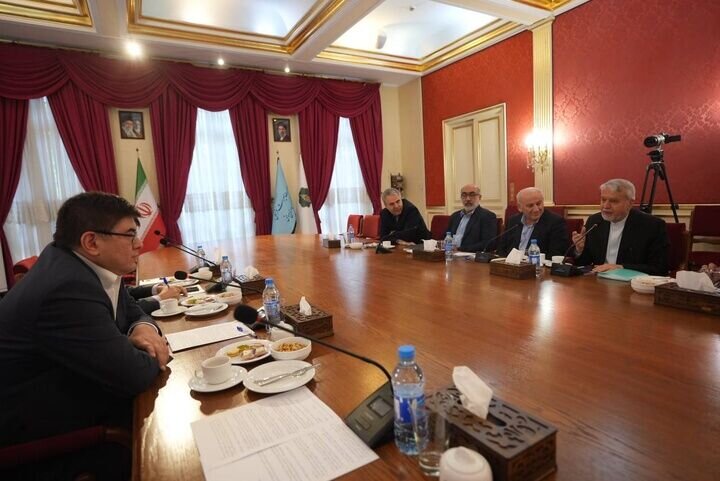
TEHRAN - Iran’s Minister of Cultural Heritage, Tourism and Handicrafts Seyyed Reza Salehi-Amiri and Tashkent’s ambassador to Tehran, Fariddin Nasriev, have discussed ways to expand tourism and cultural cooperation, revive historic Silk Road links and strengthen ties between the two countries during a meeting on Monday.
Salehi-Amiri said Iran and Uzbekistan’s relations were based on the firm will and mutual interests of their presidents, adding that the ties had developed into a shared desire among the two nations to expand bilateral relations in all areas.
The minister formally invited Uzbekistan’s minister of culture and chairman of its tourism committee to visit Iran, and outlined a package of 10 practical areas for cooperation.
He said ambassadors from the two countries had a key responsibility in implementing the proposed roadmap, with the first priority being to establish direct links between private-sector companies, holding groups and reputable travel agencies in Iran and Uzbekistan.
Salehi-Amiri also highlighted the need to address visa-related challenges and facilitate direct air links between the two countries, saying both would play a decisive role in expanding tourism exchanges.
He also called for the immediate establishment of a joint technical committee in Tehran and Tashkent to advance cooperation in the restoration of historic buildings and the revival of the Silk Road’s cultural identity.
Elsewhere in his remarks, the minister described the historic urban fabric and architectural traditions of Bukhara and Samarkand as prominent examples of the shared heritage of the eastern Islamic cultural sphere, saying their architecture evokes the identity and character of Iran’s Isfahan.
He stressed that the two countries’ commitment should be formalized through a comprehensive and binding diplomatic memorandum of understanding.
Salehi-Amiri also referred to the establishment of a national comprehensive medical tourism system, saying it would provide a transparent and modern platform for presenting medical capacities, treatment costs, arrangements for international patients and hotel services.
The system will be made available to the relevant ministries of “friendly countries”, including Uzbekistan, following its official unveiling, he said.
Nasriev, for his part, welcomed the proposals and emphasized the deep historical and spiritual roots of relations between the two nations.
“Relations between Tehran and Tashkent are based on centuries of intellectual and civilizational exchanges,” he said, adding that this shared heritage provided a foundation for expanding diplomatic ties under current circumstances.
The ambassador said continued consultations between the leaders of the two countries were driving the expansion of bilateral interaction in various fields.
He said Uzbekistan hosted 11 million international tourists last year, including 23,000 Iranian visitors.
AM
Leave a Comment